Top Automated Garage Doors Options for Modern Properties
Designing an automated residential entrance requires balancing heavy physical structures with precise electrical motor systems. Top Automated Garage Doors Options. Standard manual overhead doors rely on basic balance springs, but smart automated systems require exact alignment across drive tracks, motor gears, and safety sensors.
Selecting high-performance automated doors involves evaluating structural panel density, motor horsepower, thermal efficiency ratings, and digital control protocols. Poorly specified drive motors strip gears quickly when paired with heavy insulated panels, causing high maintenance costs and sudden system failures over time.
Proper installation connects mechanical lifting mechanisms, security communication layers, and architectural aesthetics into a unified entry system. Thoughtful engineering ensures automated doors deliver quiet operation, reliable access, and consistent weather protection across decades of continuous daily use.
Understanding “Top Automated Garage Doors Options”
Evaluating the top automated garage doors options requires analyzing internal mechanical drives rather than focusing solely on surface panel designs. Property owners often buy attractive door faces while ignoring opener motor torque ratings, drive track rigidity, and emergency backup battery systems.
Assessing the top automated garage doors options involves examining five fundamental mechanical elements:
-
Drive Mechanism Architecture: Choosing between direct-drive, belt-drive, chain-drive, or wall-mounted jackshaft operators based on noise limits and overhead space.
-
Motor Power Output: Selecting continuous-duty DC motors with soft-start and soft-stop functionality to prevent mechanical shock on panel joints.
-
Smart Ecosystem Integration: Verifying native compatibility with encrypted rolling-code protocols, mobile access applications, and home automation hubs.
-
Safety Sensor Assemblies: Installing dual-path infrared safety beams and mechanical resistance sensors to prevent closure accidents.
-
Emergency Override Systems: Integrating external key release mechanisms and high-capacity internal batteries for power outages.
Mounting heavy doors onto light residential openers causes severe track flex and fast motor failure over short operating periods. Installing basic openers on heavy carriage doors leads to gear damage, leaving vehicles trapped inside garages unexpectedly.
Identifying the top automated garage doors options requires understanding how mechanical stress builds up during continuous daily operation. Specifying commercial-grade openers ensures complete door assemblies withstand frequent daily use without requiring constant repairs or alignment adjustments.
Mechanical Foundations and System Dynamics
Automated overhead doors function as dynamic mechanical assemblies where weight balance and motorized force must work together perfectly. Torsion springs counter-balance panel deadweight, allowing low-torque electric motors to control vertical travel smoothly along steel tracks.
When balance springs lose tension, drive openers absorb excess deadweight, leading to worn motor gears and binding tracks. High friction levels increase operational noise, straining drive motors and accelerating mechanical hardware breakdowns across the entire assembly.
Historical Evolution of Automated Access Controls
Early twentieth-century automated openers utilized large industrial motors paired with heavy reduction gears and exposed drive chains. These early motorized systems provided basic convenience, but lacked essential safety reverse sensors, remote access encryption, and quiet operating features.
Mid-century suburban expansion popularized compact overhead trolley openers using ceiling-mounted tracks and analog radio transmitters. While overhead trolleys improved home access, fixed-frequency radio signals remained vulnerable to signal interference and basic security breaches.
Modern automated access platforms incorporate encrypted rolling-code transmissions, energy-efficient DC motors, integrated LED lighting arrays, and optical safety sensors. Contemporary engineering guarantees automated door systems deliver smooth travel, quiet operation, and strong perimeter protection.
Physics of Motorized Lifters and Drive Dynamics
Operating automated garage doors subjects mounting tracks, drive belts, and lift cables to continuous mechanical forces. High structural panel weight resists movement, meaning track alignment errors create heavy roller drag or section joint damage during travel.
Primary physical stress vectors:
-
Rotational Drive Torque: Rotational forces applied by motor drive sprockets to drive belts or lift chains during initial panel acceleration.
-
Track Drag Friction: Lateral forces exerted by roller wheels against guide tracks during panel movement across upper track curves.
-
Hinge Pin Friction: Wear occurring at section joint hinges during horizontal-to-vertical travel transitions under motor tension.
-
Cable Tension Load: High tension placed on steel lift cables during motorized lifting operations.
When automated doors are balanced correctly, counter-balance springs support panel weight across the entire travel stroke. High operational friction strains electric motors, causing thermal cutouts and accelerating mechanical wear across drive gears.
Neglecting roller lubrication permits friction to wear down steel axle shafts during daily operation. High friction levels increase operating noise, straining drive motors and accelerating mechanical hardware breakdowns over time.
Architectural Frameworks for System Selection
The Integrated Operational Load Framework
This framework evaluates panel weight, spring counter-balance force, and motor torque to ensure balanced performance across all components. Pairing heavy insulated panels with underpowered drive motors creates weak points that cause fast mechanical breakdowns.
The Structural Envelope Protection Model
This specification model assesses how automated doors maintain thermal barriers, wind resistance, and perimeter weather protection during movement. Preserving tight structural seals prevents energy loss, water infiltration, and outdoor noise transfer into home interiors.
The Operational Security Resilience Model
This framework matches digital encryption standards, rolling-code frequencies, and mechanical locking devices against local security risks. Automated entry systems must block physical break-in attempts while providing reliable access for authorized family members.
Structural Categories and Mechanical Systems
Direct-Drive Motor Systems
Direct-drive openers utilize a single stationary chain embedded inside a steel track, moving the motor unit silently along the rail. Featuring only one moving part, direct-drive systems eliminate drive belts and sprockets, delivering smooth operation and low maintenance demands.
Although direct-drive openers require higher initial investments, their simple design prevents mechanical wear during high-frequency daily use. Ultra-quiet operation makes direct-drive systems ideal for residential garages situated directly beneath bedrooms or living spaces.
Side-Mount Jackshaft Operators
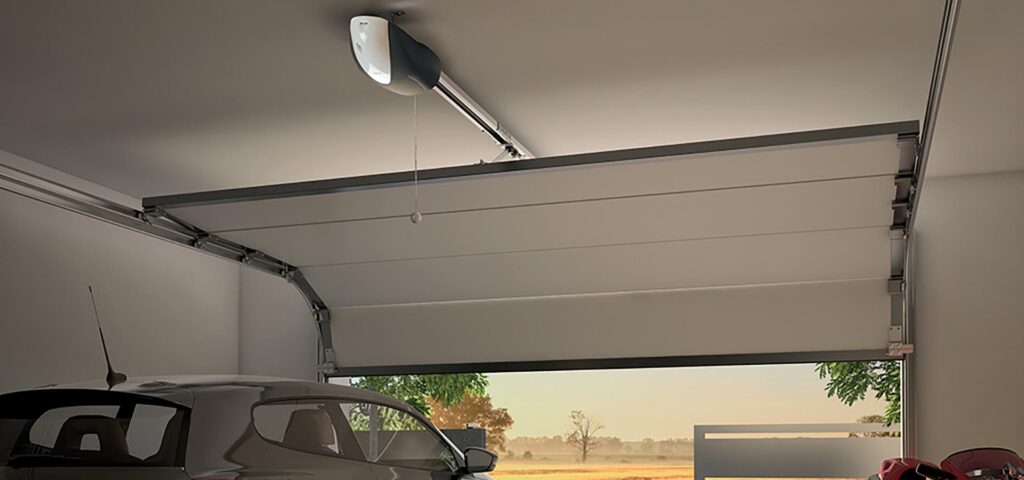
Side-mount jackshaft operators attach directly to wall surfaces beside torsion spring shafts, lifting doors by rotating counter-balance rods directly. Eliminating ceiling-mounted trolley tracks opens up valuable overhead storage space, ideal for high-ceiling or cathedral-style garages.
However, jackshaft operators require side wall clearance and compatibility with specific torsion spring assemblies. System planners must ensure structural wall framing handles rotational motor torque without flexing under load.
Reinforced Steel Trolley Belt Openers
Reinforced belt-drive openers use steel-braided rubber belts to pull lifting trolleys silently along steel overhead guide rails. Belt-drive systems eliminate metal-on-metal chain contact, reducing operational noise while providing strong lifting power for heavy doors.
While belt-drive openers offer quiet operation, extreme heat can stretch synthetic drive belts over extended usage periods. Periodic belt tension checks ensure smooth trolley travel and prevent belt slipping on motor sprockets.
Heavy Duty Commercial Chain Openers
Commercial-grade chain openers feature full-strand steel chains moving along heavy structural steel T-rails. Built for heavy commercial doors, these openers prioritize raw lifting power and reliable operation over quiet running characteristics.
These openers lift heavy panel assemblies at lower purchase costs, making them ideal for detached workshops and RV bays. However, metal chain contact creates operational noise and requires periodic grease applications to prevent rust.
Comparative Hardware Performance Matrix
| Automation Category | Initial Cost Index | Noise Generation | Maintenance Requirements | Lifting Capacity | Ideal Placement |
| Direct-Drive Motor | High | Ultra-Quiet | Extremely Low | High | Attached Garages |
| Side-Mount Jackshaft | High | Quiet | Low | Very High | High-Ceiling Bays |
| Steel-Reinforced Belt | Moderate – High | Quiet | Low | High | Standard Residential |
| Heavy Commercial Chain | Low – Moderate | Audible | Moderate | Extreme | Detached Workshops |
Regional Environmental Adaptations
Selecting automated door options requires matching hardware specifications to regional weather patterns, coastal humidity, and wind load codes. Installing uninsulated doors in northern states wastes heating energy, while unsealed components rust rapidly in humid coastal areas.
Tailored regional recommendations:
-
Humid Coastal Regions: Specifying stainless steel tracks, aluminum panels, and weather-sealed side-mount openers.
-
Cold Northern Zones: Prioritizing polyurethane-injected steel doors with thermal breaks and high-torque DC openers.
-
Arid Southwestern Deserts: Selecting UV-stable powder coatings, heat-resistant drive belts, and dust-sealed gearboxes.
-
Attached Living Spaces: Installing quiet direct-drive operators, insulated panels, and vibration-dampening ceiling brackets.
Environmental Planning and Climate Resistance
Coastal installations require protecting electrical openers and track hardware from salt air corrosion and moisture damage. Standard raw steel tracks rust quickly, causing roller binding and putting heavy strain on drive motors.
Specifying powder-coated steel tracks, stainless steel hardware, and sealed motor housings prevents coastal weather damage. Protective coatings maintain smooth hardware operation, extending overall system lifespans in harsh maritime environments.
Northern homes require insulated sandwich panels and heavy bottom weather seals to block winter cold drafts. Polyurethane insulation preserves garage temperatures, preventing moisture condensation on cold opener circuit boards during winter months.
Realistic Operational Scenarios and Applications Top Automated Garage Doors Options
Scenario 1: Quiet Access for Attached Bedrooms
A suburban family needs to replace a noisy chain-drive opener situated directly below a primary bedroom. Late night vehicle entries wake sleeping family members due to loud track vibrations and noisy motor gears.
Compounding operational problem:
-
Initial Challenge: Loud metal chain vibrations transmit noise upward through floor framing into living areas.
-
System Specification: Installing polyurethane steel sandwich panels paired with a quiet direct-drive opener system.
-
Hardware Adaptation: Vibration isolation mounts, heavy thirteen-ball-bearing nylon rollers, and rubber track seals are added.
-
Operational Result: Operational noise levels drop significantly, allowing quiet vehicle access without disturbing household sleep.
Upgrading to direct-drive motors eliminates noisy metal chain clatter, providing quiet operation near living spaces. Vibration isolation mounts prevent sound transmission, keeping home interiors peaceful during late vehicle entries.
Scenario 2: Space Optimization for High-Ceiling Garages
A homeowner wants to install a overhead car lift inside a garage featuring high twelve-foot ceilings. Standard ceiling-mounted trolley openers block upper workspace clearance, preventing full vehicle elevation on the lift.
Compounding workspace issue:
-
Space Challenge: Overhead trolley tracks block vertical lifting space, limiting vehicle storage on car lifts.
-
Material Selection: Installing a wall-mounted side-mount jackshaft opener attached directly to the torsion spring shaft.
-
Track Configuration: Installing high-lift vertical track extensions and heavy-duty wall mounting brackets.
-
Functional Outcome: Overhead ceiling space opens completely, allowing vehicles to elevate fully on car lifts safely.
Side-mount jackshaft openers clear ceiling areas, turning tight garages into versatile dual-vehicle storage bays. High-lift tracks move door panels close to ceiling surfaces, maximizing vertical clearance inside home workshops.
Financial Dynamics and Operational Lifecycle Overhead
Budgeting for automated garage door options requires accounting for initial panel costs, track hardware, opener units, and installation labor. Setting aside contingency funds covers unexpected structural framing repairs, wiring updates, or electrical outlet installations.
Component Lifecycle Cost Structure
| Expense Category | Standard Budget Range | High-End Commercial Range | Cost Management Strategy | Risk of Cheap Hardware |
| Automated Opener Assembly | $350 – $750 | $1,100 – $2,600 | Select quiet belt or direct-drive motor systems | Stripped Plastic Gears |
| Insulated Door Panels | $1,200 – $3,500 | $4,500 – $14,000 | Choose polyurethane steel sandwich over single skin | Panel Flexing / Denting |
| Heavy Track Hardware | $200 – $400 | $600 – $1,400 | Specify eleven-gauge galvanized steel guide tracks | Track Twisting / Drag |
| High-Cycle Springs | $180 – $380 | $500 – $1,200 | Order high-cycle spring wire rated for high daily use | Sudden Spring Failure |
| Safety Sensor Kits | $50 – $120 | $180 – $450 | Install dual optical beams and backup battery units | Door Closure Accidents |
Investing in heavy tracks and high-cycle torsion springs extends overall operational service lifespans. Quality openers move heavy panel stacks smoothly, protecting exterior panel finishes from mechanical shock over time.
Diagnostic Tools and Engineering Field Equipment
Evaluating automated door performance requires accurate measuring tools, infrared alignment devices, and electrical testing hardware. Precision field tools help technicians detect framing alignment issues, thermal leaks, and track drag early.
Essential diagnostic toolkit:
-
Laser Track Alignment Levels: Precision tools used to verify vertical track plumb and horizontal parallelism across spans.
-
Digital Force Gauges: Testing devices used to measure manual lift resistance and operational door balance accurately.
-
Infrared Thermal Cameras: Diagnostic tools used to check panel thermal leaks, insulation voids, and seal tightness.
-
Multimeter Electrical Testers: Testing devices used to measure motor current draw, transformer voltage, and sensor continuity.
-
Winding Rod Assemblies: Cold-rolled steel tools required to adjust high-tension torsion springs safely during maintenance.
Using laser levels ensures vertical tracks are aligned perfectly, preventing roller drag and reducing operating noise. Precise spring adjustment guarantees proper manual balance, protecting opener drive gears from strain.
System Maintenance Protocols and Hardware Verification
Establishing structured maintenance schedules ensures automated door assemblies remain energy-efficient, safe, and quiet over long lifespans. Dividing maintenance routines into seasonal checks keeps hardware operating smoothly.
Semi-Annual Hardware and Lubrication Audits
Applying synthetic lubricants to hinges, rollers, and torsion springs reduces friction and prevents metal wear. Homeowners should inspect lift cables for frayed wire strands and check track brackets for loose mounting bolts.
Applying silicone lubricants to rubber weather seals maintains flexibility, preserving tight perimeter weather barriers. Soft, pliable gaskets block cold winter drafts from entering home interiors during cold seasons.
Annual Safety Sensor and Reverse Testing
Testing safety sensors ensures infrared beams stop closing doors when obstacles cross entrance thresholds. Technicians should place a wooden block on floor surfaces to verify mechanical auto-reverse systems react properly on contact.
A well-maintained safety system reverses panel direction immediately upon touching floor obstacles during testing. Repairing faulty safety sensors protects children, pets, and vehicles from accidental closing impacts.
Failure Taxonomy and Operational Risks
Analyzing failure modes highlights how poor hardware choices cause major mechanical breakdowns over time. Identifying structural risks early protects investments and keeps automated doors working reliably.
Failure degradation sequence:
-
Stage 1 (Sensor Misalignment): Optical safety sensors shift out of alignment, preventing automated door closing ($100 repair).
-
Stage 2 (Roller Bearing Wear): Unsealed roller bearings lose grease, producing high friction and noise ($180 repair).
-
Stage 3 (Stripped Drive Gears): Friction forces un-balanced doors to strip plastic motor gears ($420 repair).
-
Stage 4 (Spring Cable Snap): High friction overloads torsion springs, snapping lift cables and dropping heavy panels ($3,800+ replacement).
Fixing sensor alignment early stops mechanical strain from damaging expensive motor gearboxes. Routine maintenance checks protect door hardware, ensuring quiet operation across all seasons.
Performance Metrics and System Signal Tracking
Evaluating automated door options involves tracking thermal insulation performance, mechanical balance, and operational noise over time. Regular diagnostic checks confirm installation quality meets overall performance goals.
Key performance indicators:
-
Manual Lift Resistance Force: Physical effort required to raise balanced doors manually (should stay under twenty pounds).
-
Track Parallelism Differential: Variance in distance between parallel tracks from floor aprons to upper curves.
-
Operational Decibel Output: Noise levels produced by drive motors during travel (should stay under fifty decibels).
-
Motor Amperage Draw: Electrical current used by motors during lifting operations compared to baseline ratings.
Tracking motor amperage draw helps technicians identify worn roller bearings or binding tracks before major failures occur. Quiet panel travel confirms accurate track alignment and proper spring tension calibration.
Architectural Misconceptions and Technical Fallacies Top Automated Garage Doors Options
The Excessive Horsepower Solution Fallacy
A common misconception is assuming buying a high-horsepower opener solves operational binding on heavy doors. Motor power cannot replace accurate counter-balance spring tuning, as lifting un-balanced deadweight strips drive gears quickly.
Calibrating spring tension to match exact panel deadweights guarantees smooth, quiet door travel across all cycles. Balanced counterweights prevent premature opener motor failure and extend overall hardware lifespans.
The Zero-Maintenance Automation Myth
Another myth is assuming automated garage doors require no regular maintenance after initial installation. All mechanical systems experience spring tension loss, bolt loosening, and sensor misalignment during daily operation.
Scheduling semi-annual hardware inspections ensures minor alignment issues are fixed before causing major equipment failures. Routine maintenance keeps automated doors operating smoothly, quietly, and safely across long lifespans.
Environmental Sustainability and Material Recycling
Sustainable building practices involve choosing recyclable materials and sourcing durable building products. Steel skins, aluminum frames, and iron spring assemblies are fully recyclable at regional scrap processing facilities.
Selling scrap metal generates cash returns that help offset new hardware purchase expenses. Reusing sound wood framing lumber for structural blocking reduces job site construction waste.
Installing polyurethane-insulated sandwich doors lowers home heating and cooling energy consumption. Durable components resist environmental wear, keeping replacement hardware out of municipal landfills for decades.
Editorial Synthesis and Architectural Recommendations
Specifying the top automated garage doors options requires treating wide access openings as integrated structural systems. Combining polyurethane steel sandwich panels, heavy eleven-gauge tracks, high-cycle springs, and quiet direct openers ensures safe operation.
Project execution summary:
-
Structural Assessment: Verify opening dimensions, header framing strength, and local climate exposure levels early.
-
Material Selection: Select durable polyurethane steel sandwich or composite materials built for long cycle lifespans.
-
Hardware Engineering: Specify heavy eleven-gauge tracks, high-cycle torsion springs, and quiet direct-drive openers.
-
Commissioning Audits: Perform manual balance tests, optical safety sensor checks, and seal audits before final sign-off.
Following a disciplined engineering approach turns wide access openings into quiet, energy-efficient architectural assets. High-quality materials and precise hardware installation guarantee long-term operational performance while enhancing total property value.